We hold MHIC licenses #165499 and #165367 and Delaware contractor's license number 2025712634 . We are Bonded and Insured!

Your Complete Fall Home Preparation Guide: Get Ready for Winter
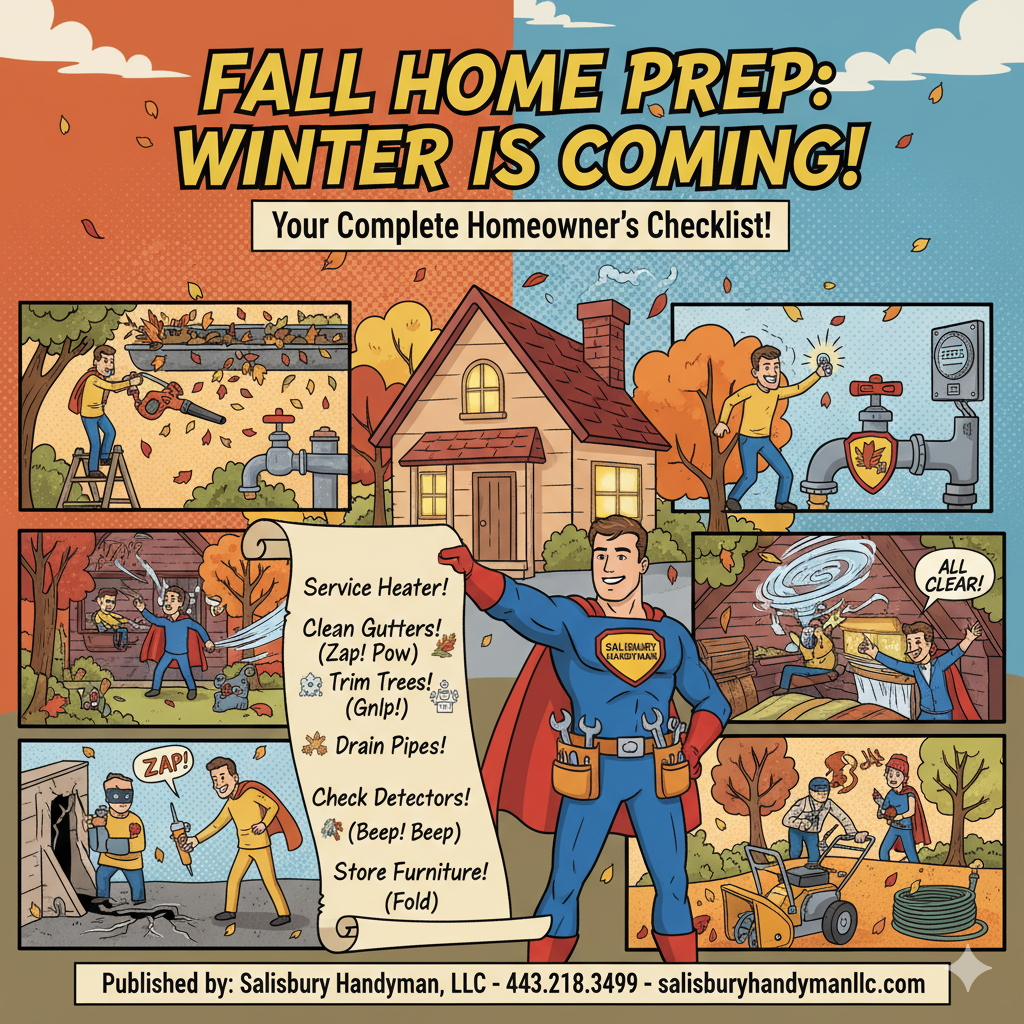
Prepare your home for winter with our complete fall maintenance checklist. From heating systems to gutters, we cover everything homeowners need to know.
HOMEOWNER TIPSFALL HOME MAINTENANCE
Scott
10/28/20256 min read
Your Complete Fall Home Preparation Guide: Get Ready for Winter
As the leaves start to change and temperatures begin to drop, it's time to think about preparing your home for the harsh winter months ahead. Taking care of these essential maintenance tasks now can prevent costly repairs later, improve your home's energy efficiency, and give you peace of mind when winter storms roll through.
At Salisbury Handyman, LLC, we've put together this comprehensive fall checklist to help you tackle the most important seasonal tasks. While some of these projects are perfect DIY jobs, others benefit from professional expertise. Let's walk through what needs to be done before the first freeze.
Heating, Ventilation, and Fire Safety
Your heating system is about to work overtime, so now's the time to make sure it's ready for the challenge.
Service Your Heating System
Before you need your furnace or boiler on a daily basis, schedule a professional inspection and tune-up. A trained technician can identify potential problems, clean essential components, and ensure your system is operating efficiently. This simple step can extend the life of your equipment, reduce energy bills, and prevent those dreaded midnight breakdowns when temperatures plummet.
Change Air Filters
This is one of the easiest yet most impactful maintenance tasks you can do yourself. Replace or clean the filters in your furnace or HVAC system. Dirty filters restrict airflow, forcing your system to work harder and driving up energy costs. Fresh filters improve both efficiency and indoor air quality—a win-win as you'll be spending more time indoors.
Test and Reverse Ceiling Fans
Here's a trick many homeowners don't know about: ceiling fans aren't just for summer. Test your thermostat to ensure it's working properly, then switch your ceiling fans to run clockwise at a low speed. This pushes warm air that rises to the ceiling back down into your living space, helping you stay comfortable without cranking up the heat.
Inspect the Fireplace and Chimney
If you use a fireplace, professional inspection and cleaning is essential. Creosote buildup in your chimney is a serious fire hazard, and obstructions like bird nests can prevent proper ventilation. A certified chimney sweep will remove these dangers and check that your damper operates correctly, so you can enjoy cozy fires safely all winter long.
Check Safety Detectors
This is non-negotiable: test all smoke and carbon monoxide detectors throughout your home. Replace batteries if you haven't done so in the last year. With your heating system, fireplace, and other fuel-burning appliances working harder, functioning detectors are your family's first line of defense against deadly carbon monoxide and fire hazards.
Exterior and Roof Maintenance
Your home's exterior takes the brunt of winter weather, so giving it attention now prevents serious damage down the road.
Clean Gutters and Downspouts
Clogged gutters are one of the most common causes of winter home damage. Clear all leaves and debris from your gutters and downspouts to ensure proper drainage. When gutters overflow, water can seep into your roof, damage fascia boards, and even compromise your foundation. In winter, standing water in clogged gutters freezes and creates ice dams that can cause extensive roof damage. Make sure downspouts direct water at least 3-4 feet away from your foundation.
Inspect the Roof
Take a careful look at your roof—if you're not comfortable climbing up there, binoculars work just fine from the ground. Check for missing, loose, or damaged shingles and have them repaired before winter storms arrive. A small repair now can prevent water infiltration and expensive interior damage when snow and ice pile up.
Trim Trees
Survey the trees around your property and prune any dead or overhanging branches. Heavy snow and ice can turn weak branches into projectiles that damage your roof, siding, or windows. This is especially important for branches within 10 feet of your home.
Secure the Foundation
Walk around your home's perimeter and inspect the foundation and siding for gaps or cracks. Seal any openings you find—they're not just energy leaks, they're invitations for mice, insects, and other pests looking for a warm place to spend the winter.
Water, Pipes, and Plumbing
Frozen pipes are every homeowner's nightmare, but they're entirely preventable with proper preparation.
Winterize Outdoor Faucets
This three-step process is crucial: First, disconnect and drain all garden hoses and store them indoors. Second, shut off the water supply to all exterior hose bibs or spigots—you'll typically find separate shut-off valves inside your home, often in the basement or utility room. Third, open the outdoor spigots to drain any remaining water, then close them. For extra protection, consider installing insulated faucet covers.
Drain Irrigation Systems
If you have an in-ground sprinkler system, have the lines professionally blown out to remove all water. Water left in irrigation lines will freeze, expand, and crack the pipes, leading to expensive repairs come spring.
Insulate Exposed Pipes
Any water pipes in unheated areas—basements, crawl spaces, attics, or exterior walls—should be wrapped with foam pipe insulation or heat tape. This inexpensive measure prevents frozen pipes that can burst and cause thousands of dollars in water damage.
Water Heater Check
Consider draining a few gallons from your water heater tank to remove sediment buildup. This simple maintenance improves efficiency and extends the life of your water heater, ensuring you have plenty of hot water during cold months.
Drafts and Insulation (Energy Efficiency)
Keeping warm air inside and cold air outside makes your home more comfortable and significantly reduces heating costs.
Seal Air Leaks
Do a thorough inspection of all doors and windows, feeling for drafts. Apply or replace weatherstripping around doors and windows, and use caulk to seal any cracks or gaps in framing or exterior walls. Don't forget less obvious spots like where utilities enter your home, around exhaust fans, and near your attic hatch.
Check Insulation
Adequate insulation in your attic, basement, and crawl spaces is your best defense against heat loss. Most homes should have R-38 to R-49 insulation in the attic. If yours falls short, adding insulation is one of the most cost-effective energy improvements you can make.
Winterize Air Conditioners
For window AC units, remove them if possible and store them indoors. If removal isn't an option, cover and insulate them to prevent cold air infiltration. For central AC systems, clear debris from around the outdoor condenser unit and consider covering the top to keep out leaves and debris (but leave the sides open for ventilation).
Check or Install Storm Windows and Doors
If your home has storm windows and doors, now's the time to swap them in for your screens. That extra layer of insulation makes a noticeable difference in both comfort and energy bills.
Yard and Storage
Properly storing seasonal items protects your investment and makes space for winter equipment.
Store Outdoor Furniture
Clean and store patio furniture, umbrellas, and cushions in a garage, shed, or basement. For grills, clean them thoroughly and store them as well—but remember that propane tanks must always be stored outdoors for safety reasons.
Put Away Summer Tools
Drain gas and oil from lawnmowers and other summer power equipment before storing them. This prevents fuel degradation and engine damage. On the flip side, if you have a snowblower, now's the time for a tune-up to ensure it starts reliably when you need it.
Yard Cleanup
Rake and dispose of all fallen leaves. While a light leaf cover can benefit garden beds, excessive leaves on your lawn block sunlight and trap moisture, promoting disease and preventing healthy spring growth.
Emergency Preparedness
Winter storms can knock out power and make roads impassable, so being prepared isn't just smart—it's essential.
Stock Winter Supplies
Make sure you have plenty of salt or ice melt on hand, along with snow shovels and sand for traction. Check that your emergency kit is current with blankets, flashlights with fresh batteries, a battery-powered radio, and non-perishable food and water for at least three days.
Check Your Generator
If you have a backup generator, test it now to ensure it's in working order. Check fuel levels and consider running it through a full cycle. There's nothing worse than discovering your generator won't start during a winter power outage.
When to Call in the Professionals
While many of these tasks are manageable DIY projects, some require professional expertise and specialized equipment. At Salisbury Handyman, LLC, we're here to help with everything from heating system tune-ups and chimney inspections to gutter cleaning, weatherproofing, and comprehensive fall maintenance packages.
Don't wait until the first freeze to discover problems with your home. Taking action now protects your investment, keeps your family safe and comfortable, and helps you avoid emergency repairs during the busiest (and most expensive) time of year for home services.
Ready to check items off your fall maintenance list? Contact us today at 443.218.3499 or scott@salisburyhandymanllc.com to schedule your fall home preparation service. We'll make sure your home is winter-ready so you can relax and enjoy the season ahead.
Contact
Get in touch for your home repairs, or scan the QR code with your phone to add us to your contacts.
Follow our facebook page
scott@salisburyhandyman.com
443.218.3499
© 2025. All rights reserved.
END-USER LICENSE AND USAGE AGREEMENT
Effective Date: October 1, 2025
This End-User License and Usage Agreement (the "Agreement") is a binding legal agreement between you ("User," "End-User," or "You") and Salisbury Handyman, LLC ("Company," "We," or "Us") governing your use of the Appointment Scheduling Application (the "Application" or "App") accessible via our website, http://salisburyhandymanllc.com (the "Website").
BY ACCESSING OR USING THE webiste/applications, YOU AGREE TO BE BOUND BY THE TERMS AND CONDITIONS OF THIS AGREEMENT. IF YOU DO NOT AGREE TO THESE TERMS, DO NOT USE THE APPLICATION.
1. DEFINITIONS
Application (or App): Refers to the proprietary software, functionality, and services provided by the Company for the purpose of scheduling, managing, and confirming appointments.
User/End-User/You: The individual or entity accessing and using the Application.
Company/We/Us: Salisbury Handyman, LLC.
Website: The website domain where the Application is hosted and accessed: http://salisburyhandymanllc.com.
2. LICENSE GRANT
The Company hereby grants to you a non-exclusive, non-transferable, revocable, limited license to use the Application solely for its intended purpose of scheduling and managing appointments for your legitimate business or personal use, in accordance with the terms of this Agreement.
3. USAGE RESTRICTIONS
You agree not to, and you will not permit others to:
a. Copy or Modify: Copy, modify, adapt, translate, reverse engineer, disassemble, decompile, or create derivative works based on the Application or any part thereof.
b. Sublicense or Distribute: Sublicense, lease, sell, or otherwise distribute the Application or any rights therein to any third party.
c. Circumvent Security: Attempt to circumvent any security features or mechanisms used in the Application.
d. Unlawful Use: Use the Application for any illegal or unauthorized purpose, or in any way that violates any applicable local, national, or international law or regulation.
e. Automated Access: Access the Application through any automated means (such as bots or scripts), except where expressly authorized by the Company in writing.
f. Harmful Activity: Engage in any activity that interferes with or disrupts the Application, servers, or networks connected to the Application, including transmitting any viruses, worms, or other malicious code.
4. USER DATA AND PRIVACY
a. Data Accuracy: You are solely responsible for the accuracy, quality, and legality of all data and information you submit, upload, or process using the Application, including, but not limited to, appointment details, customer information, and contact details ("User Data").
b. Consent: You warrant that you have all necessary rights and consents required to submit the User Data to the Application and to authorize the Company to process it in connection with the provision of the Application.
c. Privacy Policy: Use of the Application is also governed by the Company’s Privacy Policy, which is incorporated by reference into this Agreement. You agree to the terms of the Privacy Policy.
5. INTELLECTUAL PROPERTY
You acknowledge and agree that the Company owns all legal right, title, and interest in and to the Application, including all associated intellectual property rights (whether registered or not, and wherever in the world those rights may exist), including but not limited to copyrights, trademarks, service marks, and trade secrets. This Agreement does not grant you any ownership rights in the Application.
6. TERMINATION
a. By User: You may terminate this Agreement at any time by ceasing all use of the Application and deleting your account, if applicable.
b. By Company: The Company may terminate this Agreement immediately, without prior notice, if you breach any term of this Agreement or if the Company ceases to offer the Application.
c. Effect of Termination: Upon termination, all rights and licenses granted to you will immediately cease. Sections 3 (Usage Restrictions), 5 (Intellectual Property), 7 (Disclaimer of Warranties), 8 (Limitation of Liability), and 9 (Governing Law) shall survive termination.
7. DISCLAIMER OF WARRANTIES
THE APPLICATION IS PROVIDED TO YOU "AS IS" AND "AS AVAILABLE," WITH ALL FAULTS AND DEFECTS, AND WITHOUT WARRANTY OF ANY KIND. TO THE MAXIMUM EXTENT PERMITTED UNDER APPLICABLE LAW, THE COMPANY, ON ITS OWN BEHALF AND ON BEHALF OF ITS AFFILIATES AND ITS AND THEIR RESPECTIVE LICENSORS AND SERVICE PROVIDERS, EXPRESSLY DISCLAIMS ALL WARRANTIES, WHETHER EXPRESS, IMPLIED, STATUTORY, OR OTHERWISE, WITH RESPECT TO THE APPLICATION. THE COMPANY DOES NOT WARRANT THAT THE APPLICATION WILL MEET YOUR REQUIREMENTS, ACHIEVE ANY INTENDED RESULTS, BE COMPATIBLE OR WORK WITH ANY OTHER SOFTWARE, SYSTEMS, OR SERVICES, OPERATE WITHOUT INTERRUPTION, MEET ANY PERFORMANCE OR RELIABILITY STANDARDS, OR BE ERROR-FREE.
8. LIMITATION OF LIABILITY
TO THE FULLEST EXTENT PERMITTED BY APPLICABLE LAW, IN NO EVENT SHALL THE COMPANY OR ITS AFFILIATES, DIRECTORS, OFFICERS, EMPLOYEES, AGENTS, SUPPLIERS, OR LICENSORS BE LIABLE FOR ANY INDIRECT, PUNITIVE, INCIDENTAL, SPECIAL, CONSEQUENTIAL, OR EXEMPLARY DAMAGES (INCLUDING, WITHOUT LIMITATION, DAMAGES FOR LOSS OF PROFITS, DATA, OR GOODWILL), ARISING OUT OF OR IN CONNECTION WITH YOUR USE OF OR INABILITY TO USE THE APPLICATION, EVEN IF THE COMPANY HAS BEEN ADVISED OF THE POSSIBILITY OF SUCH DAMAGES. NOTWITHSTANDING ANY DAMAGES THAT YOU MIGHT INCUR, THE ENTIRE LIABILITY OF THE COMPANY UNDER ANY PROVISION OF THIS AGREEMENT SHALL BE LIMITED TO THE AMOUNT ACTUALLY PAID BY YOU TO THE COMPANY FOR THE APPLICATION IN THE TWELVE (12) MONTHS PRECEDING THE CLAIM.
9. GOVERNING LAW AND DISPUTE RESOLUTION
This Agreement shall be governed by and construed in accordance with the laws of the, without regard to its conflict of law principles. Any legal action or proceeding arising under this Agreement shall be brought exclusively in the courts located in
10. CONTACT INFORMATION
If you have any questions about this Agreement, please contact us at: